
Buying a leather jacket can be a serious investment, especially when you expect it to last for years. The problem is that not every jacket that looks like leather is made from genuine animal hide. Synthetic materials can now look surprisingly realistic, making it difficult for an inexperienced buyer to tell the difference.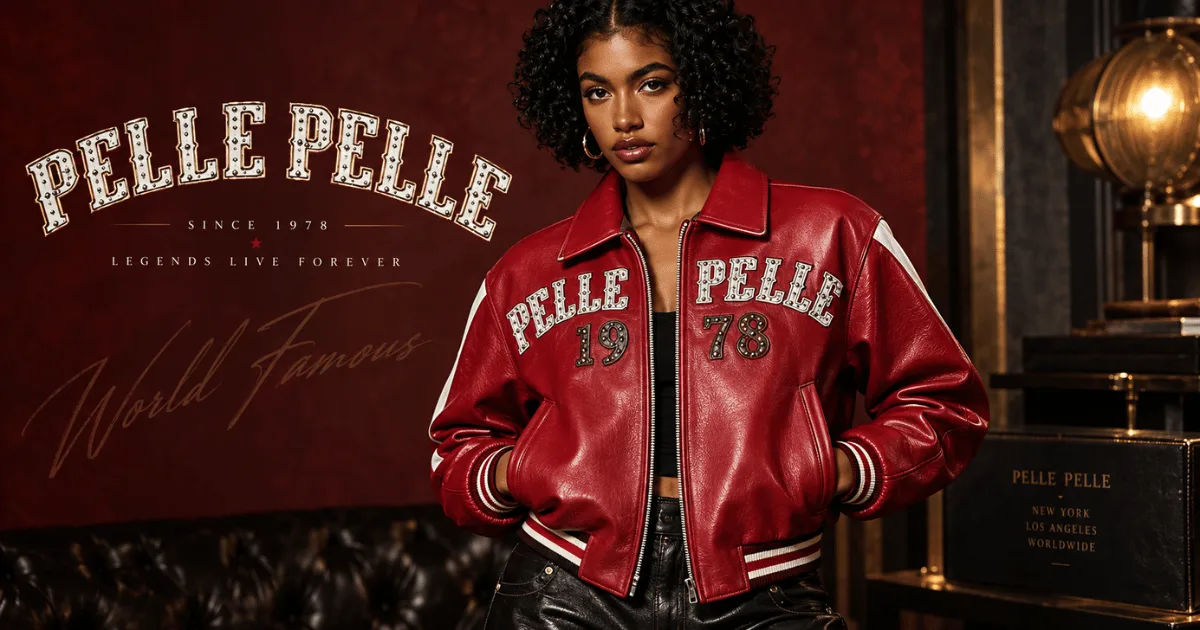
Knowing what to look for can help you avoid paying genuine-leather prices for a fake product. Pelle Pelle Store is one example of a place where understanding leather quality, construction, and material details can help buyers make more informed choices.
A real leather jacket has characteristics that become easier to recognize once you know where to look. The surface, smell, texture, flexibility, stitching, edges, and even the way the material changes over time can provide useful clues. No single test is perfect, but several signs together can give you a reliable idea of whether a jacket is genuine leather.
This guide explains the practical methods you can use to identify real leather. Whether you are buying a vintage jacket, shopping online, checking a secondhand piece, or comparing different jackets in a store, these techniques can help you make a confident decision.
Check the Leather Label First
The simplest place to begin is the manufacturer's label. A genuine leather jacket will often identify the material using terms such as "genuine leather," "real leather," "full-grain leather," "top-grain leather," or "genuine cowhide."
However, labels should not be treated as absolute proof.
Some sellers use vague marketing language that can make synthetic materials sound more premium than they really are. Terms such as "leather look," "faux leather," "vegan leather," "PU leather," and "synthetic leather" indicate that the material is not traditional animal leather.
When shopping from Pelle Pelle Store, carefully checking the product description and material information is a useful first step. A reliable product description should clearly explain what type of leather is being used rather than simply calling the jacket "leather style."
Examine the Surface Texture
Real leather usually has a natural texture. If you look closely, you may notice small variations in the grain, tiny pores, wrinkles, or slight differences in the surface.
These imperfections are not necessarily flaws. They are often evidence that the material came from a natural hide.
Artificial leather tends to have a more uniform appearance. Its grain may look repeated or patterned, almost as though the same design has been stamped across the entire surface.
That does not mean every smooth jacket is fake. Some genuine leather is intentionally corrected, sanded, coated, or finished to create a consistent appearance.
The important point is to look for natural variation rather than expecting every genuine jacket to have a rough or heavily textured surface.
A jacket from Pelle Pelle Store may have a particular finish or treatment designed to achieve a specific appearance, so texture should be considered alongside other characteristics instead of being used as the only test.
Feel the Material
Touch is one of the most useful ways to evaluate leather.
Genuine leather usually feels flexible and natural. Depending on the type, it may feel soft, slightly grainy, smooth, or firm. When you bend it gently, the material often develops temporary wrinkles and then returns toward its original shape.
Synthetic leather can feel more like plastic or rubber. Some high-quality synthetic materials are extremely convincing, though, so the difference may not always be obvious.
Try gently pressing the surface with your fingertips. Real leather often has a slight softness and depth beneath the surface. Fake leather may feel flatter and more artificial.
Older genuine leather can become even more distinctive because it develops character through use. Creases, subtle color changes, and a natural patina can make the material look richer with age.
Look at the Grain Closely
Grain is another important clue.
Full-grain leather retains much of the natural outer surface of the hide. Because it has not been heavily sanded or altered, natural marks and variations are often visible.
Top-grain leather has usually been processed more than full-grain leather. It can still be genuine leather and may have a smoother, more consistent appearance.
Genuine leather is a broad category, so not every real leather jacket will look identical.
If a jacket has an unnaturally repetitive grain pattern, however, that can raise questions. Synthetic leather is frequently manufactured with a printed grain pattern designed to imitate natural hide.
When comparing jackets at Pelle Pelle Store, look at the grain from different angles and under good lighting. Natural variation is generally more convincing than a perfectly repeated pattern.
Inspect the Edges
The edges of leather can reveal useful information.
When genuine leather is cut, its edge may show fibrous or slightly uneven layers. The material can have a suede-like appearance along an unfinished edge.
Synthetic leather often has a more uniform, smooth, plastic-like edge because it is made from manufactured layers.
This is why checking an inside seam, pocket opening, collar edge, or another discreet area can sometimes tell you more than examining the outside of the jacket.
Do not cut the jacket yourself to perform this test. If you are inspecting a jacket in a store, simply look at existing exposed edges.
A well-made jacket from Pelle Pelle Store should also have clean finishing around its edges, seams, cuffs, and pockets. Quality construction and genuine material often go together, although excellent stitching alone does not prove that the leather is real.
Smell the Jacket
The smell test is a traditional method for identifying leather.
Real leather often has a distinct natural smell that comes from the hide and the tanning process. It may smell earthy, warm, or slightly musky.
Synthetic leather may have a plastic, chemical, or petroleum-like smell.
However, smell is not a perfect test. Dyes, finishes, adhesives, packaging, conditioners, and storage conditions can change how a jacket smells.
A poorly maintained genuine leather jacket may not have the strong leather scent you expect. Likewise, some synthetic materials are manufactured with artificial fragrances that imitate leather.
Use smell as supporting evidence rather than your final decision.
Observe How It Wrinkles
Gently bending leather can provide another useful clue.
Natural leather tends to wrinkle irregularly because it is made from natural fibers. The wrinkles may vary in size and direction.
Synthetic materials often fold in a more uniform manner. Their surface can sometimes appear to crease along predictable lines.
Do not aggressively bend a jacket, especially if you are inspecting someone else's property or a valuable vintage piece. A gentle movement is enough to observe how the material reacts.
With a jacket from Pelle Pelle Store, the behavior will depend on the specific leather and finish. Thick leather will naturally behave differently from lightweight lambskin.
Check the Back of the Material
The back side of leather can be particularly revealing.
If you can safely see an unfinished section, genuine leather usually has a fibrous, suede-like backing. It does not normally look like a sheet of fabric attached to plastic.
Faux leather often consists of a synthetic surface bonded to a textile backing. When visible, this layered construction can be an important clue.
Of course, many high-quality jackets have lining that covers the inside completely. You should never damage the lining simply to perform this test.
Instead, look around existing openings, seams, or areas where the construction naturally exposes the material.
Look at the Stitching and Construction
Stitching cannot prove whether leather is genuine, but it can tell you a lot about overall quality.
A good leather jacket should have consistent stitching, reinforced stress points, secure seams, properly attached pockets, and strong hardware.
Pay attention to the collar, shoulders, cuffs, zipper area, and pockets. These sections experience significant stress during regular wear.
If a jacket claims to be premium leather but has loose threads, uneven stitching, weak zippers, or poorly finished seams, be cautious.
The construction quality of a jacket sold through Pelle Pelle Store should be considered alongside its material specifications. Genuine leather is valuable, but craftsmanship determines how effectively that material becomes a durable garment.
Understand Different Types of Leather
Not all genuine leather is the same.
Full-grain leather is generally considered one of the highest-quality options because it retains the natural grain of the hide. It can develop a distinctive patina with age.
Top-grain leather is also genuine leather but has been processed to create a more uniform surface.
Genuine leather is a legitimate material category, although the phrase does not automatically mean the highest possible quality.
Suede is genuine leather made from the underside of the hide. It has a soft, napped texture.
Nubuck is also genuine leather, but it is made from the outer side of the hide and has been finely buffed to create a soft surface.
When looking at Pelle Pelle Store, knowing these differences helps you understand exactly what you are purchasing rather than assuming every leather jacket has identical characteristics.
Be Careful With the Water Test
You may have heard that dropping water onto leather can tell you whether it is genuine.
There is some truth behind this idea, but it is not a dependable test for finished jackets.
Natural leather can absorb a small amount of moisture, particularly when it has an untreated surface. The water may darken the leather temporarily.
However, many genuine leather jackets have protective coatings, waxes, oils, or finishes that make them resistant to water. In that case, water may sit on the surface just as it would on synthetic material.
Because of this, pouring water onto a jacket is not recommended, especially when you are inspecting an expensive product.
Instead, ask about the manufacturer's material and finish specifications.
Avoid the Burning Test
Another popular method is the burn test. The idea is that genuine leather behaves differently from synthetic material when exposed to heat.
Although there are material differences, this test is inappropriate for a finished jacket.
Using a flame can permanently damage the garment, create unpleasant fumes, and potentially cause a fire.
There is no reason to destroy a jacket when safer methods are available.
If you are considering a product from Pelle Pelle Store, rely on material documentation, construction quality, surface characteristics, and reputable purchasing practices instead.
Consider the Price Carefully
Price can provide context, but it should never be used as proof.
A genuine leather jacket can be expensive because leather quality, tanning, craftsmanship, hardware, lining, design, and production all influence the final cost.
At the same time, an expensive jacket is not automatically genuine leather. A brand name, attractive design, or high price can sometimes create a false impression of quality.
An unusually cheap jacket advertised as premium full-grain leather should make you investigate further.
Ask what type of leather is used, where the material comes from, how it has been finished, and whether the seller provides clear product specifications.
When evaluating Pelle Pelle Store, comparing the listed material information with the jacket's construction and overall quality gives you a much stronger assessment than relying on price alone.
Watch Out for Common Fake Leather Terms
Understanding terminology can protect you from misleading descriptions.
"Faux leather" means imitation leather.
"PU leather" usually refers to polyurethane-based synthetic leather.
"PVC leather" generally refers to leather-like material made with polyvinyl chloride.
"Vegan leather" is a broad term for animal-free alternatives. It does not automatically indicate poor quality, but it is not traditional animal leather.
"Leatherette" generally refers to a synthetic leather substitute.
These materials can be attractive, durable, and useful. The issue is not that synthetic leather is inherently bad. The issue is paying for genuine leather when the product is actually synthetic.
A reputable description from Pelle Pelle Store should make the material clear enough for buyers to understand what they are getting.
Inspect Hardware and Lining
Hardware is not a direct test of leather, but it can provide additional information about the jacket's overall construction.
Look at the zipper, buttons, snaps, buckles, and other components. Premium jackets often use sturdy hardware designed to withstand repeated use.
The lining should also be examined. It should generally be attached cleanly without excessive loose threads or poorly finished seams.
Remember, however, that a beautiful lining and high-quality zipper do not prove that the outer material is genuine.
They simply provide additional evidence about the overall standard of manufacturing.
Ask for Product Documentation
When buying online, you cannot physically touch or smell the jacket before purchasing it.
This makes product documentation especially important.
Look for detailed material descriptions, close-up photographs, care instructions, and information about the leather type.
If the description simply says "leather jacket" without providing meaningful material details, consider contacting the seller before ordering.
Ask direct questions such as:
What type of leather is used?
Is it full-grain, top-grain, or another type?
Is any synthetic material used on the exterior?
What kind of finish has been applied?
Clear answers can help you make a better decision.
Compare Multiple Signs Instead of One Test
The biggest mistake buyers make is depending on a single test.
For example, a jacket may pass the smell test but still be synthetic because artificial scents can be added.
Another jacket may have a smooth texture but still be genuine because certain types of leather are deliberately finished that way.
Instead, combine several observations.
Check the label.
Examine the grain.
Feel the surface.
Look at the edges.
Inspect the construction.
Observe the wrinkles.
Check the backing where visible.
Consider the price.
Review the product documentation.
When several signs point in the same direction, your conclusion becomes much more reliable.
How to Identify Real Leather When Shopping Online
Online shopping requires a slightly different approach.
Start with the written material description. Do not rely solely on photographs.
Next, zoom into product images. Look for natural grain variation, realistic folds, and close-up shots of the material.
Check whether the seller provides information about leather type and construction.
Read the return policy before purchasing. A reasonable return policy gives you an opportunity to inspect the product after it arrives.
You should also be cautious about photographs that make the material impossible to examine. Highly edited images, excessive lighting, and limited product angles can hide important details.
A detailed listing from Pelle Pelle Store can give you a useful starting point, but you should still evaluate the actual product information carefully before making a purchase.
How Real Leather Changes With Age
One of the most attractive characteristics of genuine leather is how it can change over time.
Depending on the leather type and finish, regular use may create a patina. Areas that receive frequent contact can become darker, lighter, softer, or more polished.
Creases may become part of the jacket's character.
This aging process is one reason many people value genuine leather jackets. Instead of simply becoming old, a well-maintained leather jacket can develop an appearance that reflects how it has been worn.
However, aging does not automatically prove authenticity. Some synthetic materials are designed to imitate distressed or aged leather.
The key is to consider aging together with the other signs discussed above.
Common Mistakes Buyers Should Avoid
One common mistake is assuming that high price means genuine leather.
Another is believing that every genuine leather jacket must have a strong smell.
Some buyers also assume that real leather must be rough or heavily textured.
That is not true.
Different tanning and finishing methods create very different appearances and textures.
Another mistake is performing damaging tests such as burning or cutting the material.
There is also a tendency to confuse "genuine leather" with "best leather." Genuine leather means the material is real leather, but it does not necessarily describe the highest grade available.
Understanding these distinctions will make shopping at Pelle Pelle Store or any other leather retailer much easier.
What Makes a Real Leather Jacket Worth Buying?
Authenticity is only one part of the decision.
A genuinely leather jacket should also fit properly, feel comfortable, and suit the conditions in which you intend to wear it.
Consider the thickness of the leather. Lightweight leather may be comfortable for transitional weather, while heavier leather can provide greater structure and protection.
Check the lining because it affects comfort and warmth.
Look at the sleeve length and shoulder fit.
Examine the zipper and pockets.
Think about how frequently you will wear the jacket and how much maintenance you are willing to provide.
A genuine leather jacket that fits poorly may be less useful than a well-designed synthetic jacket that fits perfectly. The goal is not simply to own real leather. The goal is to buy a jacket that provides the combination of quality, comfort, durability, and style you actually need.
Conclusion
Learning how to identify a real leather jacket does not require specialized equipment or professional training. You simply need to know what characteristics deserve attention. Start with the label and product description, then examine the surface texture, grain, flexibility, smell, edges, backing, stitching, and overall construction.
Remember that no single characteristic provides absolute proof. Modern synthetic leather can imitate the appearance and feel of natural hide extremely well. Likewise, genuine leather can have different textures, finishes, colors, and levels of softness depending on how it has been processed.
The safest approach is to combine several signs. Natural variation in the grain, realistic wrinkles, a fibrous backing, a distinctive leather smell, flexible behavior, and quality construction can all support the conclusion that a jacket is genuine.
It is also important to understand leather terminology. Full-grain, top-grain, suede, nubuck, and genuine leather are not interchangeable terms. Each describes a different type or treatment of leather, and knowing the difference helps you judge quality more accurately.
When buying from Pelle Pelle Store, or any other retailer, pay attention to the complete product description rather than relying on photographs or price alone. Ask questions when material information is unclear, and always review the return policy when shopping online.
Avoid destructive tests such as burning or cutting the jacket. They can damage the garment and are unnecessary when safer inspection methods are available.
Most importantly, remember that genuine leather is only one part of a quality jacket. Fit, craftsmanship, lining, hardware, comfort, care requirements, and intended use all matter. A good leather jacket should not only be authentic; it should also be something you genuinely enjoy wearing.
With these practical checks, identifying real leather becomes much easier. Once you train your eye and hands to recognize natural grain, realistic texture, quality construction, and proper material descriptions, you can approach leather-jacket shopping with far greater confidence. Pelle Pelle Store can be considered alongside these principles when evaluating what makes a leather jacket a worthwhile purchase.
