
Choosing an online Quran academy is an important decision for students and parents who want to learn the Quran from the comfort of their homes. However, before enrolling, many people want to understand how academy pricing works and what factors influence the monthly cost. One common question is whether lesson duration directly affects the amount students pay. Understanding this relationship can help families select a suitable learning plan without spending more than necessary.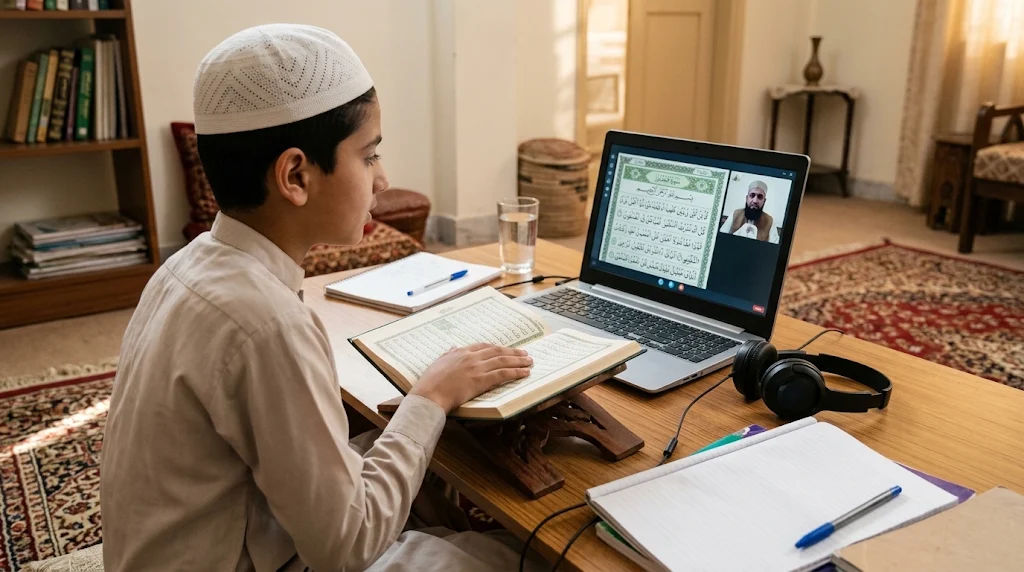
The answer is yes. In many cases, the length of each class influences the overall cost because longer lessons require more teaching time and attention from instructors. However, pricing policies differ between academies. Some charge according to the number of minutes spent in each lesson, while others offer fixed monthly packages based on weekly class frequency. Therefore, understanding online quran academy fees is essential before choosing a learning program that matches your educational needs, available time, and budget.
Several factors determine how academies calculate their charges. These include lesson duration, teacher qualifications, class frequency, individual attention, course level, and additional learning services. Some academies provide flexible packages, allowing students to select shorter or longer sessions according to their preferences.
This comprehensive guide explains how lesson duration affects academy pricing, what students should consider when comparing packages, and how families can choose an affordable learning arrangement without compromising educational quality.
How Online Quran Academy Fees Work
Online Quran academies generally offer structured learning programs for children, teenagers, and adults. These programs help students improve Quran reading, pronunciation, memorization, and understanding through live online classes.
The pricing structure depends on the services included in each package. Some academies charge a fixed monthly amount, while others calculate their prices according to teaching hours.
For example, an academy might offer three different packages:
-
Short sessions lasting 20 minutes.
-
Standard sessions lasting 30 minutes.
-
Extended sessions lasting 45 or 60 minutes.
Each package may have a different monthly price because the teacher spends a different amount of time with the student.
However, lesson duration is not always the only pricing factor. The number of classes per week and the type of course can also influence the total cost.
Why Academies Consider Lesson Duration
Teachers need sufficient time to explain concepts, listen to recitation, correct mistakes, and review previous lessons.
A 20-minute session may be enough for a beginner who is learning basic Arabic letters. However, a student studying advanced Tajweed might require a longer session.
Online quran academy fees generally involve more teaching time and preparation. As a result, academies may charge more for extended classes.
Fixed Monthly Packages
Some academies offer fixed monthly packages instead of charging separately for every lesson.
Under this arrangement, students pay a predetermined amount for a specific number of classes each month.
For example, a package might include:
-
Three lessons every week.
-
Thirty minutes per lesson.
-
Individual instruction.
-
Monthly progress reviews.
This approach makes budgeting easier because families know their expected monthly expenses in advance.
How Lesson Duration Influences Monthly Pricing
Lesson duration can directly influence the amount students pay because teachers dedicate more time to longer sessions.
However, the relationship between teaching time and price is not always proportional.
An academy might charge slightly more for a 45-minute lesson than a 30-minute lesson rather than increasing the price by exactly 50%.
This happens because some operating costs remain the same regardless of lesson length.
Short Lessons and Their Pricing
Short lessons usually last between 15 and 20 minutes.
They are often suitable for young beginners or students with limited availability.
These sessions generally focus on one or two learning objectives.
For example, a teacher might spend the entire lesson helping a beginner recognize Arabic letters and pronounce them correctly.
Short sessions can be more affordable because they require less direct teaching time.
However, students must maintain consistency to make steady progress.
Standard Lessons and Their Pricing
Standard lessons commonly last around 25 to 30 minutes.
They provide enough time for several learning activities without making the session unnecessarily long.
A typical lesson may include:
-
Reviewing the previous lesson.
-
Practicing Quranic reading.
-
Correcting pronunciation.
-
Introducing a new concept.
-
Assigning revision exercises.
Many students prefer this arrangement because it balances learning time and affordability.
When comparing online quran academy fees, standard packages are worth considering because they often provide a practical combination of teaching time and monthly cost.
Extended Lessons and Their Pricing
Extended lessons may last 45 to 60 minutes.
These sessions are useful for students who need additional practice or want to cover multiple learning objectives.
For instance, an intermediate student might study Quran reading, Tajweed rules, and memorization during an extended session.
Because the instructor spends more time teaching, extended packages may cost more.
However, longer lessons are not automatically better for every student. The ideal duration depends on concentration, learning ability, and educational goals.
Does the Number of Weekly Lessons Matter More Than Duration?
Lesson duration is important, but the number of weekly classes can have an equally significant effect on pricing.
Consider two students.
The first student attends three 20-minute lessons every week.
The second student attends five 30-minute lessons every week.
Although both students receive individual instruction, the second student receives considerably more teaching time.
Consequently, the second package may cost more.
Understanding Weekly Teaching Hours
The total monthly teaching time depends on both lesson length and weekly frequency.
For example:
|
Weekly classes |
Duration per class |
Weekly teaching time |
|---|---|---|
|
2 lessons |
20 minutes |
40 minutes |
|
3 lessons |
30 minutes |
90 minutes |
|
4 lessons |
30 minutes |
120 minutes |
|
5 lessons |
45 minutes |
225 minutes |
This comparison demonstrates why families should examine the complete package instead of focusing only on the length of one class.
Choosing the Right Class Frequency
Students should select a weekly schedule that they can maintain consistently.
Beginners may benefit from three or four shorter lessons each week.
Students preparing for Quran memorization may prefer more frequent instruction, depending on their progress and available time.
A balanced schedule allows students to practice independently between classes.
Do Different Quran Courses Have Different Fees?
Yes. The type of Quran course can influence academy pricing, even when two courses have identical lesson durations.
Different subjects require different teaching methods, preparation, and instructor expertise.
Quran Reading Courses
Quran reading courses introduce students to Arabic letters, pronunciation, joining letters, and reading complete words.
These courses are commonly designed for beginners.
Teachers usually focus on helping students develop accurate reading habits.
The duration may be relatively short because beginners often benefit from focused lessons.
Noorani Qaida Classes
Noorani Qaida is commonly used to introduce learners to Arabic pronunciation and basic Quran reading skills.
Students gradually learn:
-
Arabic alphabet recognition.
-
Letter sounds.
-
Different vowel marks.
-
Joined letters.
-
Basic pronunciation rules.
-
Reading practice.
Some students need additional time to understand these concepts.
Therefore, an academy may recommend longer sessions depending on the student's progress.
Tajweed Courses
Tajweed focuses on the correct pronunciation and recitation of Quranic words.
Students learn rules involving articulation points, letter characteristics, elongation, and other recitation principles.
Tajweed lessons sometimes require additional teaching time because instructors must listen carefully and correct individual mistakes.
Qualified Tajweed teachers may also charge different rates depending on their experience and qualifications.
Quran Memorization Courses
Hifz programs focus on memorizing Quranic verses and maintaining previously memorized portions.
These programs often require regular revision and structured supervision.
Students may need longer sessions when learning new passages or reviewing larger sections.
However, shorter and more frequent lessons can also work well for some learners.
The most suitable arrangement depends on the student's memorization goals and ability.
Quran Translation and Tafsir
Students interested in understanding Quranic meanings may enroll in translation or Tafsir classes.
These lessons involve explanations, discussions, vocabulary, and contextual learning.
Longer sessions may be appropriate because students need time to understand and discuss different concepts.
The instructor's subject knowledge may also influence the overall package price.
Other Factors That Affect Online Quran Academy Fees
Although lesson duration is an important consideration, it is not the only factor affecting the cost of online Quran education.
Families should understand the complete pricing structure before making a decision.
Teacher Qualifications and Experience
Teacher qualifications can influence academy pricing.
An experienced instructor with specialized Tajweed knowledge may charge more than a beginner-level teacher.
Some academies employ teachers with formal Islamic education and years of teaching experience.
Students should consider qualifications, communication skills, and teaching ability rather than choosing an instructor based only on price.
One-to-One and Group Classes
The type of classroom arrangement also influences pricing.
One-to-one classes
Individual classes allow teachers to focus entirely on one student.
Students receive personalized feedback and can ask questions throughout the lesson.
These classes may cost more because the instructor's teaching time is dedicated to a single learner.
Group classes
Group sessions involve several students learning together.
They can be more affordable because teaching resources are shared.
However, each student may receive less individual attention.
The best option depends on learning preferences and educational requirements.
Teacher Availability
Some academies provide flexible scheduling, allowing students to choose convenient lesson times.
Classes scheduled during popular hours may have different pricing arrangements.
Additionally, academies offering dedicated instructors and customized schedules may include these services in their monthly packages.
Learning Materials and Progress Reports
Some online academies provide additional educational resources.
These may include digital worksheets, reading exercises, revision plans, and regular progress reports.
Such services can influence the total package price.
Families should check whether these resources are included or charged separately.
Trial Classes
Many academies offer introductory or trial lessons.
These sessions allow students to understand the teacher's communication style and teaching approach.
A trial lesson can help families determine whether the proposed duration is suitable.
Before enrolling, ask whether the trial session is free or whether it carries a separate charge.
How to Compare Online Quran Academy Fees
Comparing different academies requires more than looking at advertised monthly prices.
Two academies might charge similar amounts while offering very different teaching schedules.
A proper comparison should consider lesson duration, weekly frequency, instructor qualifications, and included services.
Calculate the Total Monthly Teaching Time
First, determine how many minutes of instruction are included in each package.
For example, a package offering four weekly lessons of 30 minutes provides 120 minutes of weekly teaching.
Another package offering three weekly lessons of 45 minutes provides 135 minutes.
Although the second package includes fewer classes, it offers more total teaching time.
This calculation helps families understand what they are paying for.
Compare the Cost Per Lesson
Divide the monthly package price by the number of included lessons.
This gives an approximate cost per lesson.
For a more detailed comparison, divide the monthly price by the total number of teaching minutes.
This helps identify differences between packages with varying durations.
However, remember that the lowest cost per minute does not necessarily represent the best educational value.
Check Whether There Are Additional Charges
Some academies may charge separately for registration, learning materials, or additional sessions.
Ask about these expenses before enrollment.
A transparent pricing structure makes it easier to plan a monthly education budget.
Evaluate Teaching Quality
Affordable pricing should not be the only consideration.
A good Quran teacher should explain lessons clearly, correct mistakes patiently, and adapt the teaching approach to the student's ability.
An academy offering excellent instruction may provide better value than a cheaper alternative with limited support.
What Lesson Duration Is Suitable for Different Students?
The ideal lesson duration depends on age, concentration, previous knowledge, and learning objectives.
There is no universal duration that works equally well for everyone.
Young Children
Young children generally benefit from short, focused lessons.
Sessions lasting approximately 15 to 20 minutes may be appropriate for beginners, depending on their concentration.
Teachers can introduce simple concepts and use repetition to support learning.
Parents should also consider the child's daily routine when selecting a schedule.
Teenagers
Teenagers can often manage longer sessions, especially when they are interested in the subject.
Lessons lasting 25 to 40 minutes may provide sufficient time for reading, Tajweed practice, and revision.
However, the teacher should adjust the duration according to the student's progress.
Adult Beginners
Adults who are starting Quran learning for the first time may prefer 20 to 30-minute lessons.
This provides an opportunity to learn basic Arabic letters and pronunciation without creating an overwhelming schedule.
As confidence improves, students can consider longer sessions.
Advanced Learners
Students who already have Quran reading experience may need additional time for advanced Tajweed, memorization, or recitation improvement.
Sessions lasting 30 to 60 minutes may be suitable depending on the course structure.
The important consideration is whether the lesson provides enough time to achieve meaningful learning objectives.
Can Students Save Money by Choosing Shorter Lessons?
Shorter lessons can reduce monthly expenses when academies calculate prices according to teaching time.
However, choosing the shortest available session is not always the most economical decision.
Students should consider the relationship between lesson duration, learning objectives, and overall progress.
Avoid Choosing Duration Based Only on Price
A beginner who needs additional pronunciation practice might struggle with sessions that are too short.
Similarly, an advanced student may require more time to review memorized passages.
If the chosen duration is insufficient, students may need additional classes later.
This could increase the overall educational expense.
Select a Realistic Weekly Schedule
Students should choose a schedule that fits their daily responsibilities.
For example, three consistent lessons every week may be more effective than enrolling in a demanding schedule that becomes difficult to maintain.
Regular attendance supports learning continuity.
Ask About Flexible Packages
Some academies allow students to change lesson duration after enrollment.
This can be helpful when learning requirements change.
For example, a student might begin with 20-minute sessions and move to 30-minute sessions after developing stronger reading skills.
Families should ask about package changes and any associated charges.
Questions to Ask Before Paying Academy Fees
Before choosing an online Quran academy, parents and students should understand the complete enrollment arrangement.
Asking the right questions can prevent confusion and unexpected expenses.
Important questions include:
-
How many minutes does each lesson last?
-
How many classes are included every week?
-
Are monthly fees fixed or calculated according to teaching hours?
-
Can students change their lesson duration?
-
Are individual classes available?
-
Do teachers have relevant qualifications?
-
Are trial lessons available?
-
Are missed lessons rescheduled?
-
Are there additional registration charges?
-
Are learning materials included?
These questions provide a clearer understanding of the academy's services.
Understand the Cancellation Policy
Students should also ask what happens when they cannot attend a scheduled lesson.
Some academies allow students to reschedule missed classes, while others have specific attendance policies.
Understanding these conditions helps families avoid paying for services they cannot use.
Review Payment Arrangements
Ask whether payments are collected weekly, monthly, or according to another schedule.
It is also useful to understand the available payment methods and whether fees can change during the enrollment period.
Clear payment arrangements make long-term learning easier to manage.
Common Mistakes to Avoid When Choosing a Quran Academy
Families sometimes focus entirely on affordability and overlook important educational factors.
Avoiding these mistakes can help students make better decisions.
Choosing the Cheapest Package Automatically
A low-priced package may appear attractive, but it might include limited teaching time or fewer learning resources.
Compare the actual services before making a decision.
Selecting Lessons That Are Too Long
Longer classes do not guarantee better learning.
Students may become tired if lessons exceed their concentration levels.
Teachers should divide lessons into manageable activities and include appropriate revision time.
Ignoring Teacher Experience
A qualified and patient teacher can make a significant difference in the learning process.
Check the instructor's background and teaching approach before enrolling.
Overlooking Class Frequency
A long lesson once a week may not provide the same learning experience as several shorter lessons distributed throughout the week.
Consider how frequently the student needs guidance and revision.
Failing to Read Package Conditions
Always review the academy's payment, cancellation, rescheduling, and renewal policies.
This prevents misunderstandings later.
Conclusion
Lesson duration can play an important role in determining the cost of online Quran education. Many academies charge according to the amount of teaching time included in a package, while others offer fixed monthly plans based on the number of weekly classes and selected course.
Understanding online quran academy fees helps students and parents make informed decisions about their educational expenses. Shorter lessons may be suitable for beginners and younger learners, while longer sessions can benefit students studying advanced Tajweed, Quran memorization, translation, or Tafsir.
However, lesson duration should never be the only factor considered when selecting an academy. Teacher qualifications, individual attention, class frequency, learning materials, and teaching quality are equally important.
Before enrolling, compare different packages carefully. Calculate the total monthly teaching time, understand the cost per lesson, and check whether additional services are included. It is also helpful to ask about trial classes and flexible scheduling options.
Most importantly, select a learning arrangement that matches the student's abilities and daily routine. Consistency, patience, and effective instruction are essential for developing strong Quran learning skills.
Ultimately, the best academy is not necessarily the one offering the longest lessons or the lowest monthly price. It is the one that provides suitable teaching time, qualified instructors, transparent pricing, and a supportive learning environment. By considering these factors, families can choose an affordable and effective Quran education program that supports steady progress over time.
