
Tablet gaming has become an important part of modern digital entertainment. Tablets offer a convenient way to enjoy games without needing a desktop computer or a dedicated gaming console. Their large touchscreens, portable designs, powerful processors, and wireless connectivity make them suitable for different types of gaming experiences. Whether someone enjoys puzzles, racing adventures, strategy challenges, or multiplayer experiences, a tablet can provide an accessible gaming platform.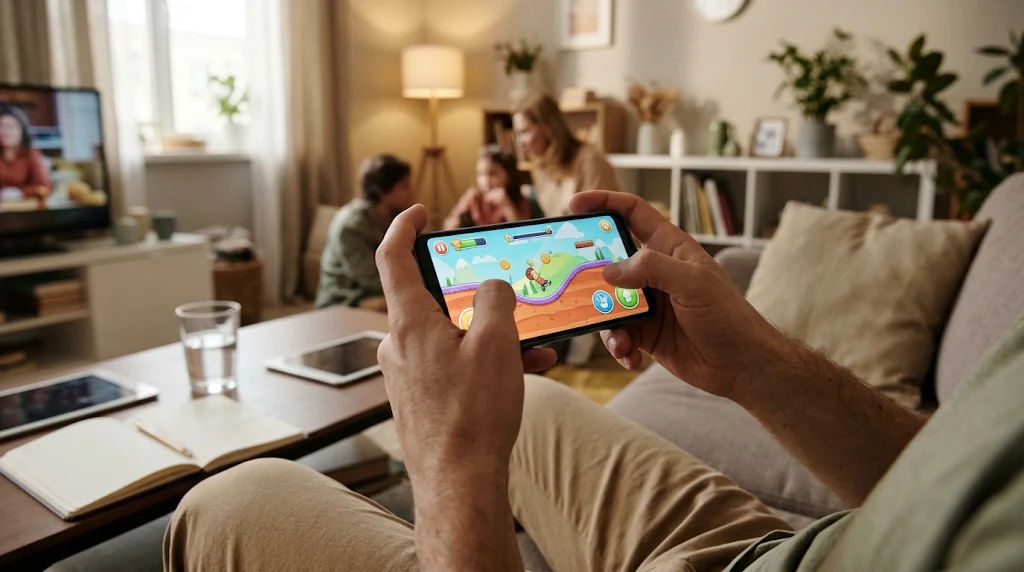
Understanding how tablet gaming works involves looking at the hardware, software, operating systems, internet connections, and controls that make games function. Modern tablets are designed to handle many gaming tasks, from simple offline entertainment to demanding multiplayer experiences. They also support online games, allowing players to connect with friends, compete against other users, and explore shared digital environments.
This comprehensive guide explains how tablet gaming works, what technology supports it, which features influence performance, and how users can enjoy a smooth and reliable gaming experience.
Basics of Tablet Gaming
Tablet gaming refers to playing digital games on touchscreen devices that combine portable hardware with computer-like capabilities. Tablets usually operate through systems such as Android, iPadOS, or other tablet-compatible platforms.
Unlike traditional computers, tablets generally use touch-based controls. Players interact with games by tapping, swiping, dragging, or holding different areas of the screen.
Some tablets also support external accessories, including wireless controllers, keyboards, and headphones. These additional devices can make certain games easier to control.
Tablet gaming works through cooperation between several components. The processor handles instructions, the graphics processor creates images, the operating system manages applications, and the touchscreen receives player input.
All these components work together to deliver an interactive experience.
The Role of the Operating System
An operating system provides the foundation that allows games to run on a tablet. It manages applications, hardware resources, storage, security, and communication between different components.
Android tablets use the Android operating system, while Apple tablets use iPadOS.
Both systems offer dedicated application stores where users can find compatible games. These stores also distribute updates, security improvements, and additional software features.
The operating system determines which games a tablet can support. Some games require newer software versions or particular hardware specifications.
Keeping the operating system updated can improve compatibility and help maintain device security.
How Games Run on a Tablet
When someone opens a game,OPEN 88tablet loads its application files into memory. The processor begins handling the game's instructions, while the graphics processor prepares the images displayed on the screen.
The touchscreen continuously receives player commands. For example, tapping a button may cause a character to jump, while swiping across the display might move an object.
The game processes these actions and updates the display accordingly.
This process happens repeatedly, creating the continuous interaction that makes gaming possible.
Important Hardware Components Behind Tablet Gaming
A tablet's hardware has a major influence on its gaming performance. Different components perform specific tasks, and their combined capabilities determine how smoothly a game operates.
Understanding these components helps explain why some tablets handle demanding games better than others.
Processor and Central Processing Unit
The central processing unit, commonly called the CPU, is responsible for processing instructions and managing different operations.
During gaming, it handles tasks such as character movements, game rules, artificial intelligence, and background calculations.
A powerful processor can manage complicated gaming activities more efficiently.
For example, a strategy game might require the tablet to calculate the movements of numerous characters. The CPU processes these instructions and helps the game respond to player decisions.
Modern tablets often use processors designed to balance performance with battery efficiency.
Graphics Processing Unit
The graphics processing unit, or GPU, handles visual information.
It creates images, animations, lighting effects, textures, and other graphical elements that appear on the display.
Games with detailed environments and realistic visual effects require stronger graphics capabilities.
A capable GPU helps maintain smooth animation and reduces interruptions caused by excessive graphical workloads.
Some tablets include integrated graphics processing within their main processor. This design allows different computing components to work together efficiently.
Random Access Memory
Random access memory, known as RAM, temporarily stores information that applications need while operating.
When a game is running, its active data is stored in RAM so that the processor can access it quickly.
Having sufficient memory helps tablets manage games and background applications more effectively.
If memory becomes limited, the operating system may close background applications to make additional space available.
This is why closing unnecessary applications can sometimes improve gaming performance.
Internal Storage
Internal storage holds installed games, application files, updates, and other information.
Games with detailed graphics and extensive content can require considerable storage space.
A tablet with sufficient storage makes it easier to install new games and download updates.
Some Android tablets also support expandable storage through memory cards, although compatibility depends on the specific model.
How Touchscreen Controls Work
Touchscreen technology is one of the most recognizable features of tablet gaming.
Instead of relying entirely on physical buttons, players interact directly with objects and controls displayed on the screen.
This creates a simple and accessible way to control different types of games.
Capacitive Touchscreen Technology
Most modern tablets use capacitive touchscreens.
These displays detect changes in electrical capacitance when a finger touches the screen.
The tablet identifies the location of the touch and sends that information to the operating system and active game.
The game then interprets the input according to its programming.
For example, touching a virtual direction button may move a character, while tapping a menu option opens another section.
Multi-Touch Support
Multi-touch technology allows a tablet to recognize several touch points simultaneously.
This feature is particularly useful for games that require players to perform multiple actions at once.
A player might use one finger to move a character and another to activate an ability.
Multi-touch support also makes gestures such as pinching, zooming, and rotating possible.
Different tablets support different levels of touch sensitivity and accuracy.
External Gaming Controllers
Although touchscreen controls work well for many games, some players prefer physical controllers.
Compatible tablets can connect to supported Bluetooth controllers.
These accessories provide physical buttons, directional controls, and analog sticks.
Controllers can be especially useful for racing, action, sports, and platform games.
However, controller support depends on the game and tablet operating system.
How Internet Connectivity Supports Tablet Gaming
Internet connectivity expands the possibilities of tablet gaming.
While many games work without an internet connection, others depend on network access for multiplayer features, updates, cloud services, and shared experiences.
Wi-Fi is one of the most common ways tablets connect to the internet.
Some tablets also support cellular connectivity through compatible mobile networks.
Playing Multiplayer Games
Multiplayer gaming allows multiple people to participate in the same digital experience.
Players may compete against each other, cooperate on shared objectives, or communicate while completing challenges.
Many online games use internet servers to coordinate player activity.
For example, when one player moves a character, the game sends relevant information through the internet. The server processes the information and communicates updates to other participants.
This process helps keep the shared game environment synchronized.
The quality of the experience depends partly on internet speed, connection stability, and server performance.
Understanding Latency and Ping
Latency refers to the time required for information to travel between a tablet and a game server.
Ping is a measurement commonly used to describe this response time.
Lower latency generally produces more responsive gameplay.
Higher latency can create delays between player actions and what appears on the screen.
A stable internet connection, a suitable router location, and reliable network equipment can help improve responsiveness.
Offline and Online Gaming
Tablet games can generally be divided into offline and online categories.
Offline games store most of their essential content directly on the device. They can often be played without internet access.
Online games require a network connection for important features.
Some games combine both approaches. They may allow players to complete certain activities offline while requiring internet access for multiplayer modes or account synchronization.
Understanding these differences helps users choose games that match their connectivity needs.
How Game Applications Are Installed and Updated
Games are usually installed through official application stores.
Android users commonly access Google Play, while iPad users use Apple's App Store.
These platforms provide game descriptions, compatibility information, ratings, screenshots, and update details.
Downloading and Installing Games
When someone selects a game, the application store downloads its installation files.
The operating system checks compatibility and installs the necessary components.
Once installation is complete, the game appears in the tablet's application library or home screen.
Some games download additional content when opened for the first time.
This content may include graphics, sound files, maps, or other resources.
Why Game Updates Matter
Developers regularly release updates to improve their games.
Updates may introduce new features, fix technical problems, improve compatibility, or address security concerns.
Some updates also improve performance on newer tablet models.
Automatic updates can reduce the need to install improvements manually.
However, users should make sure their devices have enough storage and a reliable connection before downloading large updates.
The Role of Graphics and Display Quality
A tablet's display directly affects how games look and feel.
Screen resolution, refresh rate, brightness, and color reproduction all contribute to visual quality.
Screen Resolution
Resolution describes the number of pixels used to create an image.
Higher-resolution displays can show more visual detail.
This can make textures, text, and environmental objects appear clearer.
However, higher resolutions also require additional graphical processing.
A tablet must have suitable hardware to maintain smooth performance while displaying demanding games at high resolutions.
Refresh Rate
Refresh rate describes how many times a screen updates its image each second.
It is measured in hertz (Hz).
A 60Hz display refreshes the image 60 times per second, while a 120Hz display can refresh it 120 times per second.
Higher refresh rates can make supported games appear smoother.
However, the game itself must support higher frame rates, and the tablet's hardware must be capable of producing them.
Brightness and Color Quality
Brightness affects how easily players can see the display in different lighting conditions.
Color quality influences the appearance of environments, characters, and visual effects.
A good display can make gaming more enjoyable, especially in visually detailed titles.
Adjusting brightness to suit the surroundings can also help manage battery consumption.
How Battery Power Affects Tablet Gaming
Battery performance is another important part of tablet gaming.
Unlike desktop computers, tablets usually operate using rechargeable batteries.
Games can consume considerable energy because they require continuous processing, graphics rendering, sound output, and screen activity.
Why Gaming Uses More Battery
Demanding games place additional workloads on the CPU and GPU.
The display also remains active throughout gameplay.
Wireless connections, speakers, and background applications contribute to overall power consumption.
As a result, battery levels may decrease faster during gaming than during ordinary activities such as reading or browsing.
Battery Management Features
Many tablets include built-in battery management tools.
These features monitor power consumption and help users understand which applications use the most energy.
Some devices offer low-power modes that reduce background activity or limit performance.
Although these settings can extend battery life, they may also affect gaming responsiveness.
Managing Device Temperature
Gaming can generate heat because the processor and graphics components perform continuous calculations.
Tablets generally use passive cooling designs rather than large internal fans.
Their bodies help release heat into the surrounding environment.
Taking breaks during extended gaming sessions and avoiding blocked ventilation areas can help maintain comfortable operating temperatures.
If a tablet becomes unusually hot, stopping the game and allowing the device to cool is sensible.
Popular Types of Tablet Games
Tablets support many gaming categories, making them suitable for different interests and experience levels.
The type of game determines which controls, hardware features, and connectivity options are most important.
Puzzle and Brain Games
Puzzle games involve solving problems, recognizing patterns, matching objects, or completing logical challenges.
They generally have moderate hardware requirements.
Touchscreen controls make them particularly convenient because players can interact directly with objects.
Some puzzle games also include daily challenges and progress synchronization.
Racing Games
Racing games involve controlling vehicles through different tracks and environments.
Players may use touchscreen steering controls, tilt sensors, or external controllers.
These games often require responsive graphics and accurate input recognition.
A capable GPU and a smooth display can improve the overall experience.
Strategy Games
Strategy games involve planning, resource management, decision-making, and tactical thinking.
Many use touchscreen controls to select characters, organize resources, and manage different areas.
Some strategy experiences support multiplayer competition through internet connectivity.
Adventure and Role-Playing Games
Adventure and role-playing games often include detailed environments, characters, missions, and storylines.
They may require more processing power and storage than simpler games.
Some titles also feature extensive multiplayer environments and regular content updates.
Cloud Gaming on Tablets
Cloud gaming is another technology that expands what tablets can do.
Instead of processing every aspect of a game locally, cloud gaming services run supported games on remote computers or servers.
The tablet receives a video stream of the gameplay and sends player commands through the internet.
This approach can allow compatible tablets to access experiences that might otherwise require more powerful local hardware.
How Cloud Gaming Works
The process begins when a player selects a supported game through a cloud gaming service.
The service starts the game on a remote system.
The remote computer processes the game and sends video and audio information to the tablet.
When the player touches the screen or presses a controller button, the command travels back to the remote system.
The system processes that action and sends the updated image to the device.
All these activities happen continuously.
Internet Requirements for Cloud Gaming
Cloud gaming depends heavily on network quality.
A fast and stable internet connection helps maintain clear video and responsive controls.
Unstable connectivity can cause interruptions, reduced image quality, or noticeable delays.
Wi-Fi quality, network congestion, and distance from service servers can all influence performance.
Cloud gaming also consumes internet data, which is important for people using limited mobile data plans.
Storage and Performance Optimization
Good storage management helps tablets maintain reliable gaming performance.
Installing too many large applications can reduce available storage and make updates difficult.
Although storage space and RAM perform different functions, both are important for a smooth experience.
Removing Unnecessary Applications
Applications that are no longer needed can be uninstalled to create additional storage space.
Users can also remove unnecessary downloaded files and clear supported application caches.
It is important to avoid deleting unfamiliar system files because they may be required for normal device operation.
Managing Background Activities
Some applications continue performing tasks while running in the background.
These activities can consume memory, battery power, or network resources.
Closing unnecessary applications may help a tablet allocate more resources to a demanding game.
Choosing Suitable Graphics Settings
Many games allow users to adjust their visual settings.
Options may include texture quality, shadows, resolution, and frame rate.
Reducing demanding graphical effects can help improve performance on tablets with limited hardware capabilities.
Players should choose settings that balance visual quality with smooth operation.
Security and Privacy in Tablet Gaming
Security is an important part of a safe gaming experience.
Games may request access to certain device features, such as notifications, microphones, storage, or network connections.
Users should review these permissions before granting access.
Downloading Games from Trusted Sources
Official application stores generally provide security checks and application information.
Downloading games from trusted sources reduces exposure to suspicious software.
Users should be careful with unfamiliar websites offering unofficial installation files.
They should also avoid sharing account passwords or personal information with unknown players.
Protecting Gaming Accounts
Many games allow players to create accounts to save progress and access additional features.
Strong, unique passwords can help protect these accounts.
Where available, additional account security features can provide another layer of protection.
Players should also review privacy settings and understand what information their accounts make visible to others.
Choosing the Right Tablet for Gaming
Not every tablet provides the same gaming experience.
The best choice depends on the types of games someone wants to play, their budget, and their preferred features.
Processor Performance
A capable processor is important for demanding games.
Users interested in detailed graphics and complex gameplay should pay attention to processor specifications and independent performance testing.
RAM and Storage Capacity
Sufficient RAM helps applications operate smoothly.
Storage capacity determines how many games and other files can remain installed.
A tablet with more available storage can be useful for people who regularly download large games.
Display and Battery
A good display improves visual quality, while a dependable battery supports longer portable gaming sessions.
Refresh rate and resolution should be considered alongside the device's processing capabilities.
Operating System Compatibility
Users should check whether their preferred games support Android or iPadOS.
Some titles are available on both platforms, while others may have platform-specific versions.
Checking compatibility before purchasing a tablet can prevent unnecessary disappointment.
The Future of Tablet Gaming
Tablet gaming continues to develop as mobile processors, displays, internet services, and software technologies improve.
Newer devices can handle more detailed graphics and increasingly complicated gaming experiences.
Cloud technology may also make high-quality gaming more accessible across different devices.
Artificial intelligence is another developing area. It can support smarter game characters, adaptive challenges, and improved development tools.
Developers are also exploring better controller support, improved accessibility features, and more efficient power management.
These developments suggest that tablets will remain an important platform for portable entertainment.
However, the quality of each experience will continue to depend on hardware capabilities, software optimization, and network availability.
Conclusion
Tablet gaming works through the combined capabilities of hardware, software, touchscreen technology, and wireless connectivity. The processor manages game instructions, the graphics processor creates visual content, RAM provides temporary working space, and internal storage keeps game files and updates available.
The touchscreen allows players to control games through simple gestures, while compatible accessories can provide additional control options. Internet connectivity makes multiplayer experiences, cloud gaming, account synchronization, and online features possible.
Different game categories also place different demands on a tablet. Puzzle games may work comfortably on basic devices, while advanced racing, adventure, and role-playing games can require stronger processors, better graphics, and additional memory.
Battery management, storage organization, display quality, and security also contribute to a dependable gaming experience. Understanding these features makes it easier to select suitable games and use a tablet effectively.
Ultimately, tablet gaming offers a flexible way to enjoy digital entertainment. Whether someone prefers offline puzzles, competitive multiplayer experiences, or cloud-based adventures, modern tablets provide a convenient platform with a wide range of possibilities. As technology continues to advance, tablet gaming is likely to become even more capable, accessible, and enjoyable.
